SOCIAL CRAFT
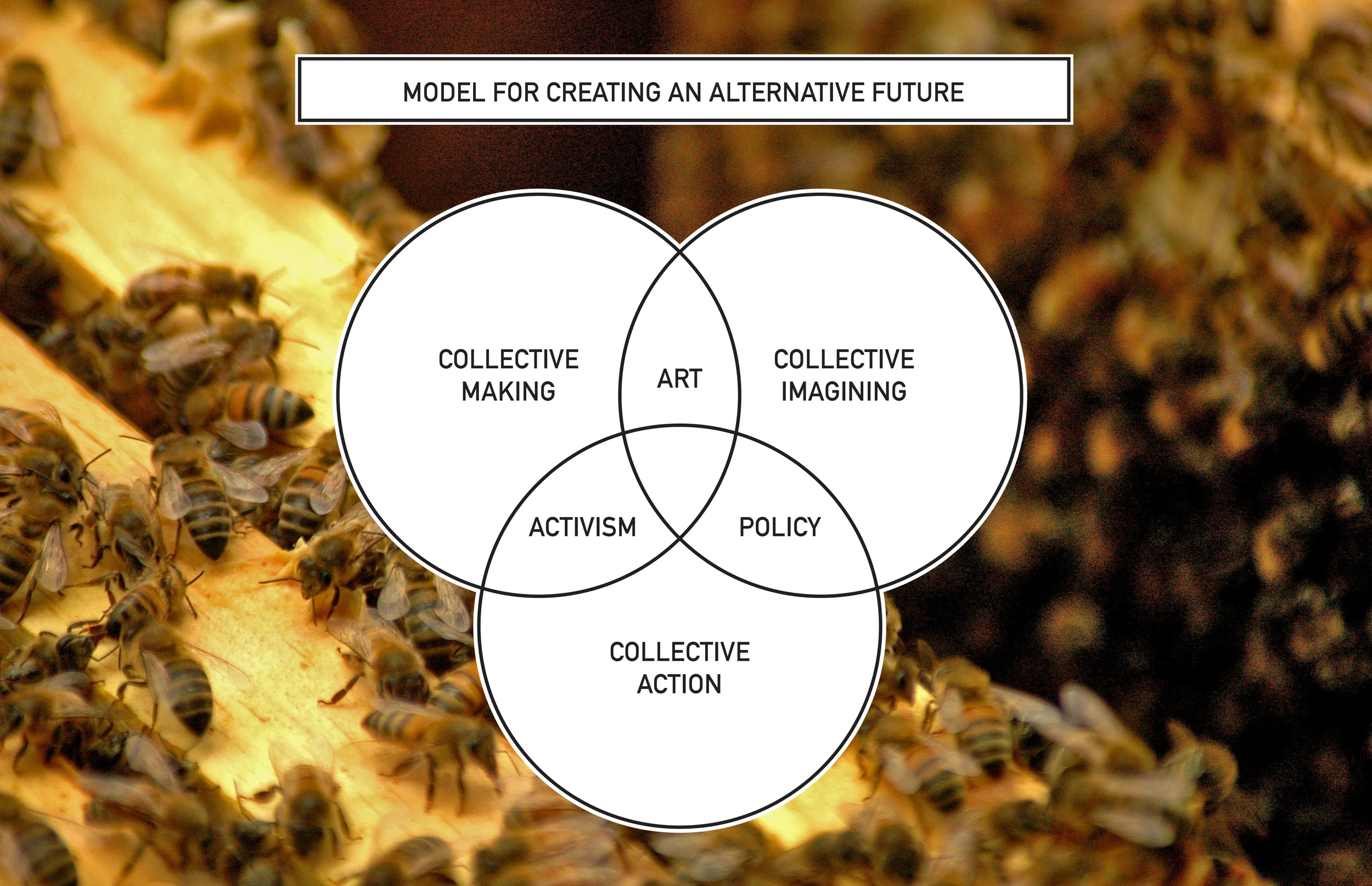
I describe a significant strand of my work and research as Social Craft. Building upon Joseph Beuys’s concept of Social Sculpture—the proposition that society itself can be understood and transformed as a creative undertaking—Social Craft shifts attention toward the repeated acts, practices, and forms through which social life is made and remade. It asks not simply what society might become, but what we need to repeatedly do in order to produce change.
Craft provides both a material practice and a conceptual framework for this research. Ceramics, textiles, woodworking, and other forms of making are grounded in repetition, accumulated knowledge, embodied skill, and transmission between people and generations. Within my practice, these processes become tools for exploring how social relationships might similarly be learned, rehearsed, maintained, repaired, and transformed.
Social Craft therefore operates through participation rather than representation alone. Projects create situations in which people make, teach, learn, work, and care together. Traditional craft forms often provide the structure for these encounters, but the object produced is not necessarily their primary outcome. Instead, making becomes a means of organising relationships: bringing different forms of knowledge into contact, creating opportunities for intergenerational and intercultural exchange, and testing alternative ways of working and living together.
At its core, Social Craft proposes that social change is itself a form of practice. Just as craft develops through sustained attention and repeated action, the social forms we wish to create must be continually performed, learned, maintained, and passed on. The work considers craft not as a retreat into tradition, but as a living repertoire of techniques through which new social possibilities can be rehearsed and made tangible.