WE ARE WHAT WE EAT
“Dis-moi ce que tu manges, je te dirai ce que tu es.”
“Tell me what you eat, and I will tell you what you are.”
— Jean Anthelme Brillat-Savarin, Physiologie du goût (The Physiology of Taste), 1825.
We Are What We Eat is a socially based body of work and research that uses cooking and shared meals to explore how we embody ecological complexity. Working through the sensory intimacy of food, each encounter investigates a system under strain—from pollinator decline and nuclear afterlives to industrialized food systems—translating seemingly abstract ecological relationships into experiences that can be tasted, touched, and physically incorporated into the audience's body. In doing so, the work traces the flows of matter, labor, and energy that bind our bodies to complex social, ecological, and political systems.
We Are What We Eat grows out of my domestic creative practice as a home cook, where technically intensive processes of preparation, fermentation, and preservation become a way to think through material relations. It is further informed by David Abram's call to sensory attention to the more-than-human world, Wendell Berry's insistence that eating is an ecological and social act, Donna Haraway's thinking on entanglement and "staying with the trouble," and Rob Nixon's account of slow violence—the incremental and often imperceptible forms of environmental harm whose effects are dispersed across time and space.
The Dow Within, 2014 - 2026
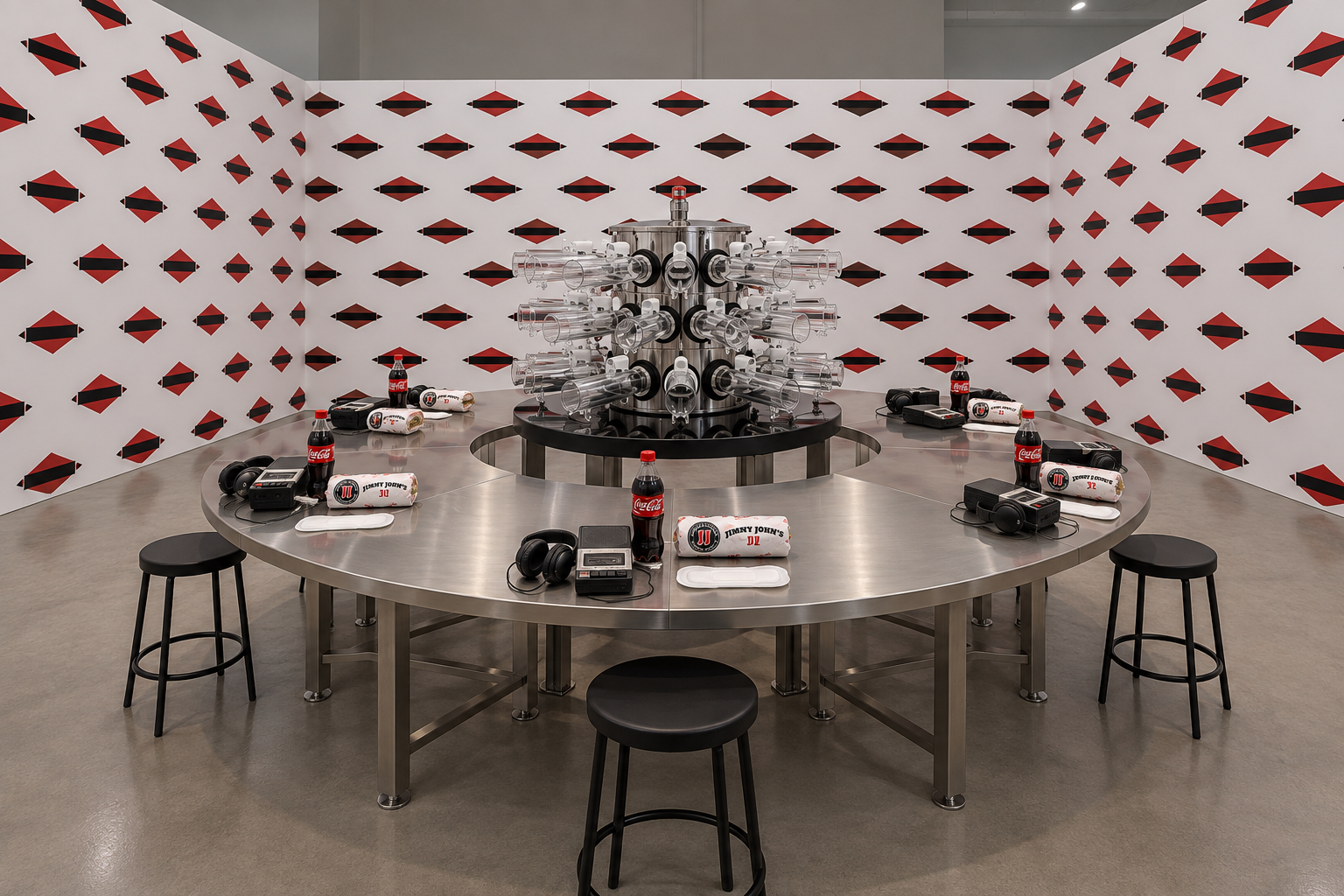
Nose-only inhalation exposure apparatus, stainless steel table, stools, cassette recorders, headphones, Coca-Cola bottles, Jimmy John's sandwiches, sanitary pads, custom-printed wallpaper. Dimensions variable.
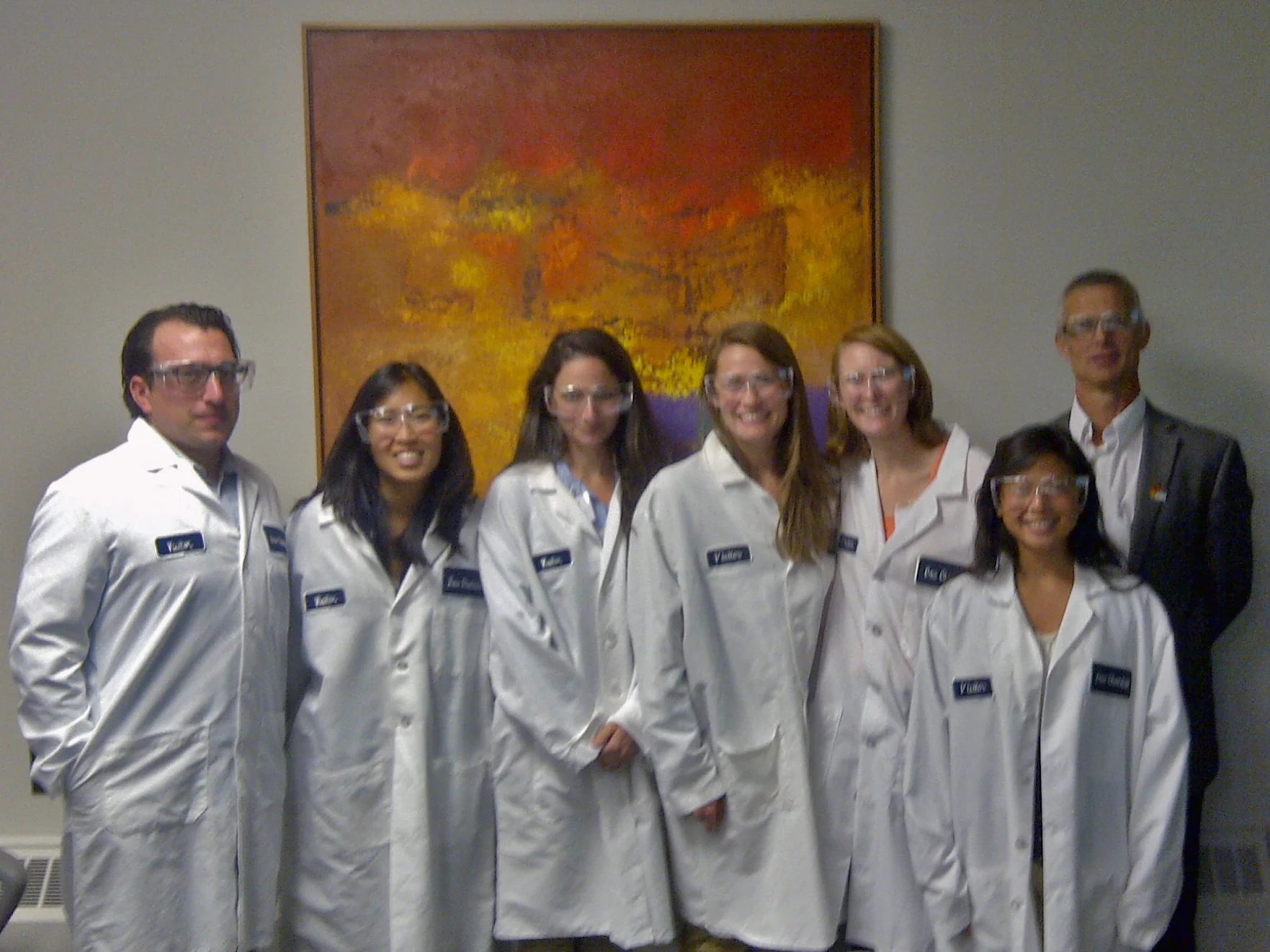
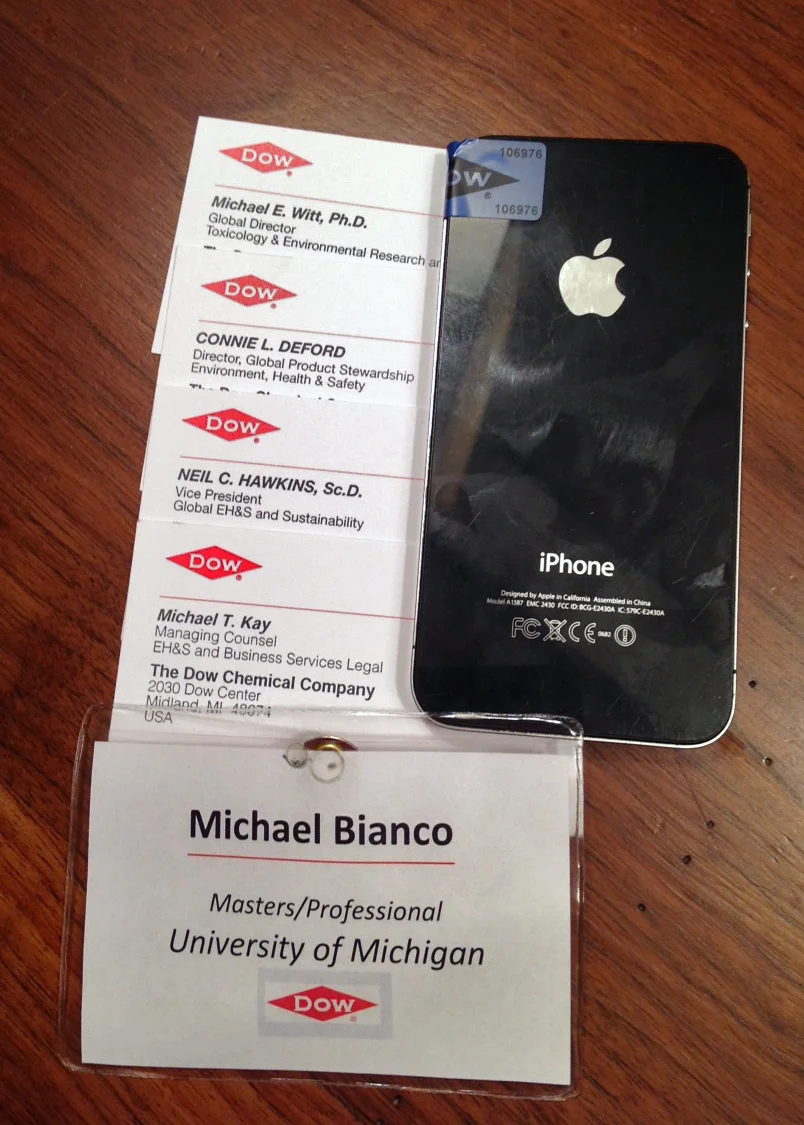
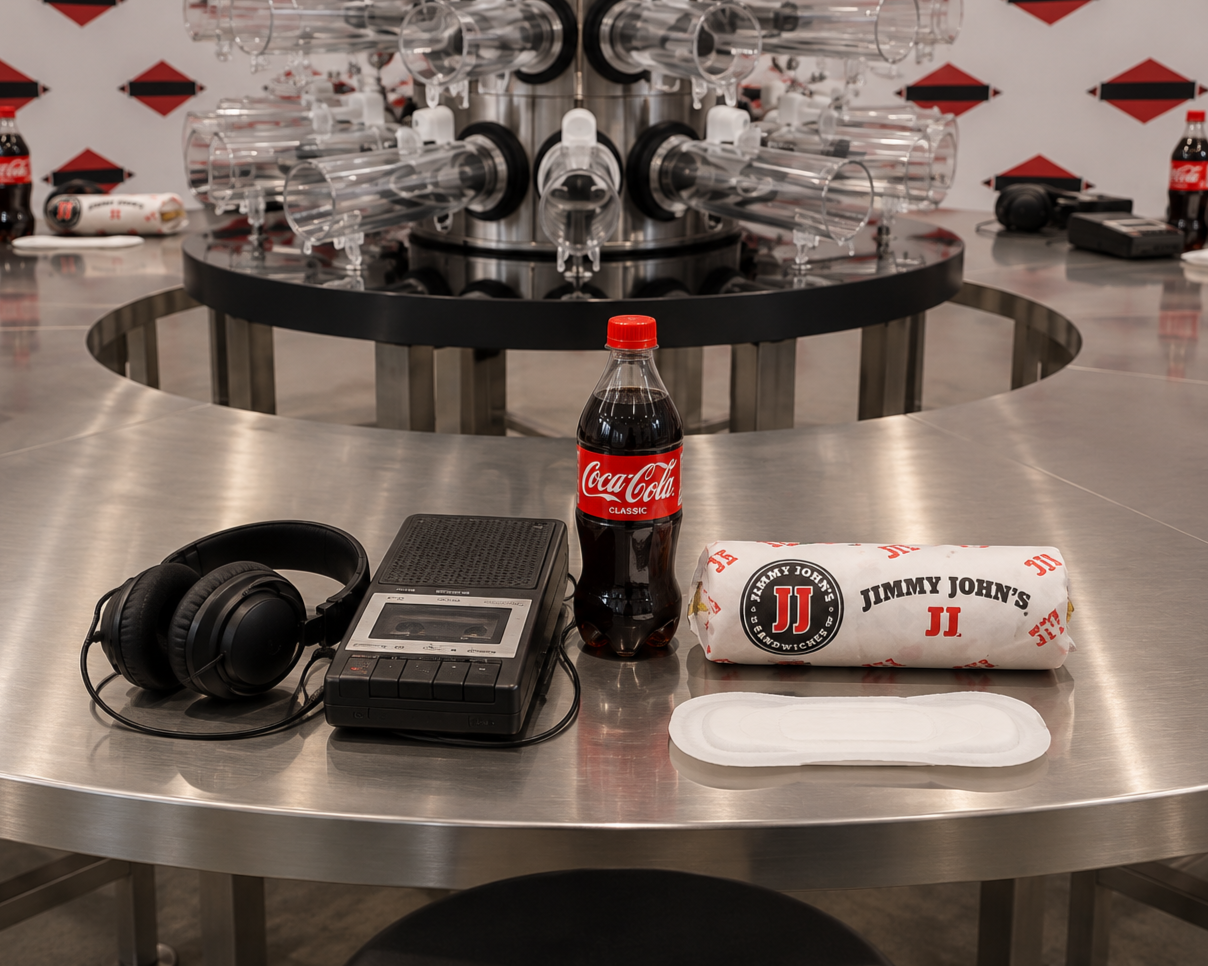
The Dow Within emerges from my experience as a Dow Sustainability Fellow in 2014, when the fellowship provided unusual access to Dow Chemical’s headquarters, laboratories, and research facilities.
The work revisits this encounter through the materials, objects, and rituals that structured my time there. What began as an attempt to look behind the corporate surface became an exploration of our own implication in the industrial systems we might otherwise seek to critique or protest. Rather than revealing something wholly external to us, the experience exposed the extent to which these systems are already embedded within the materials and routines of everyday life.
Trophallaxis: THAT’S NOT HONEY IN YOUR MOUTH, 2013-2015
Mixed-media social practice installation: honey samples, zine, participant surveys, beekeeping and community workshops, and policy research
Dimensions variable
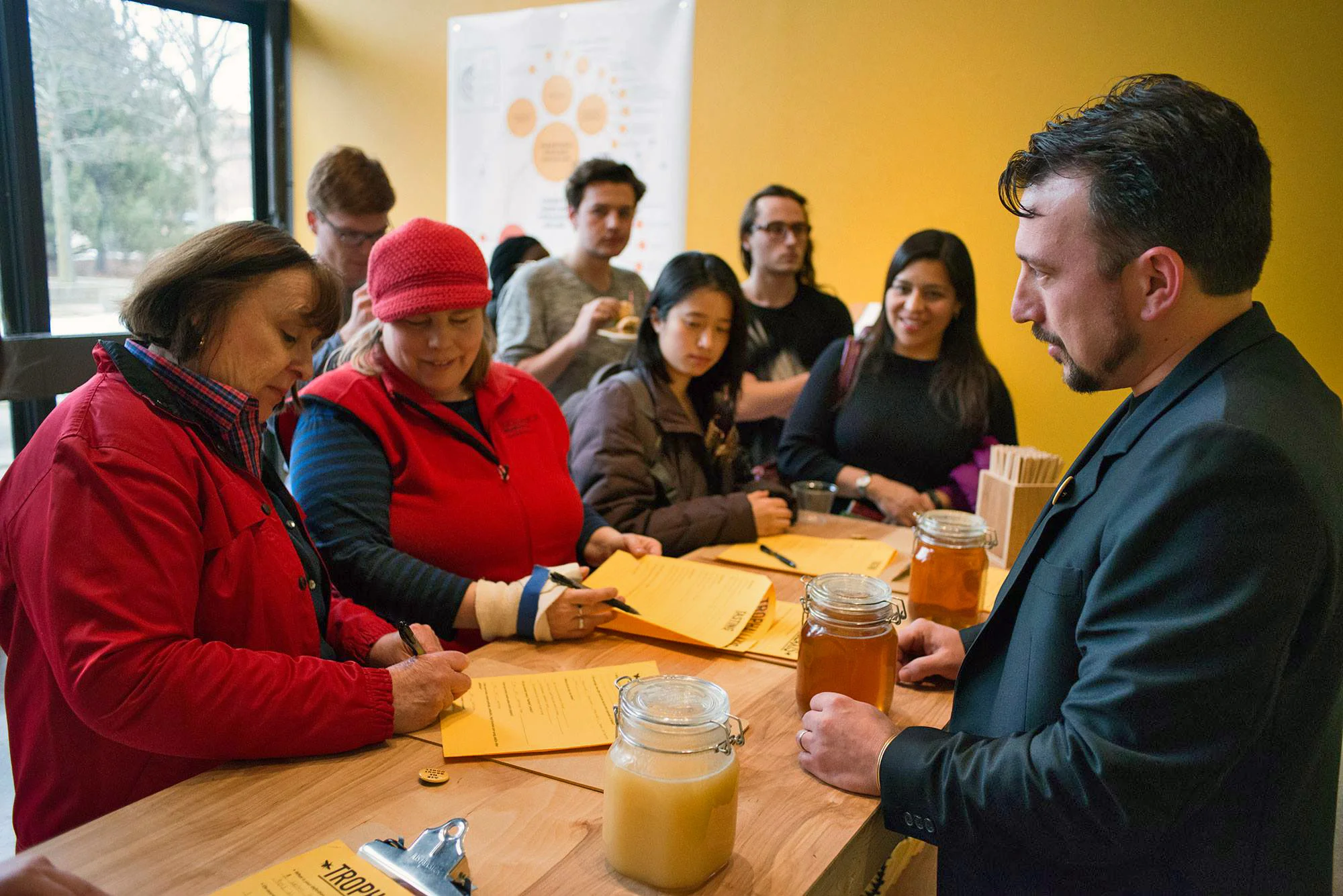
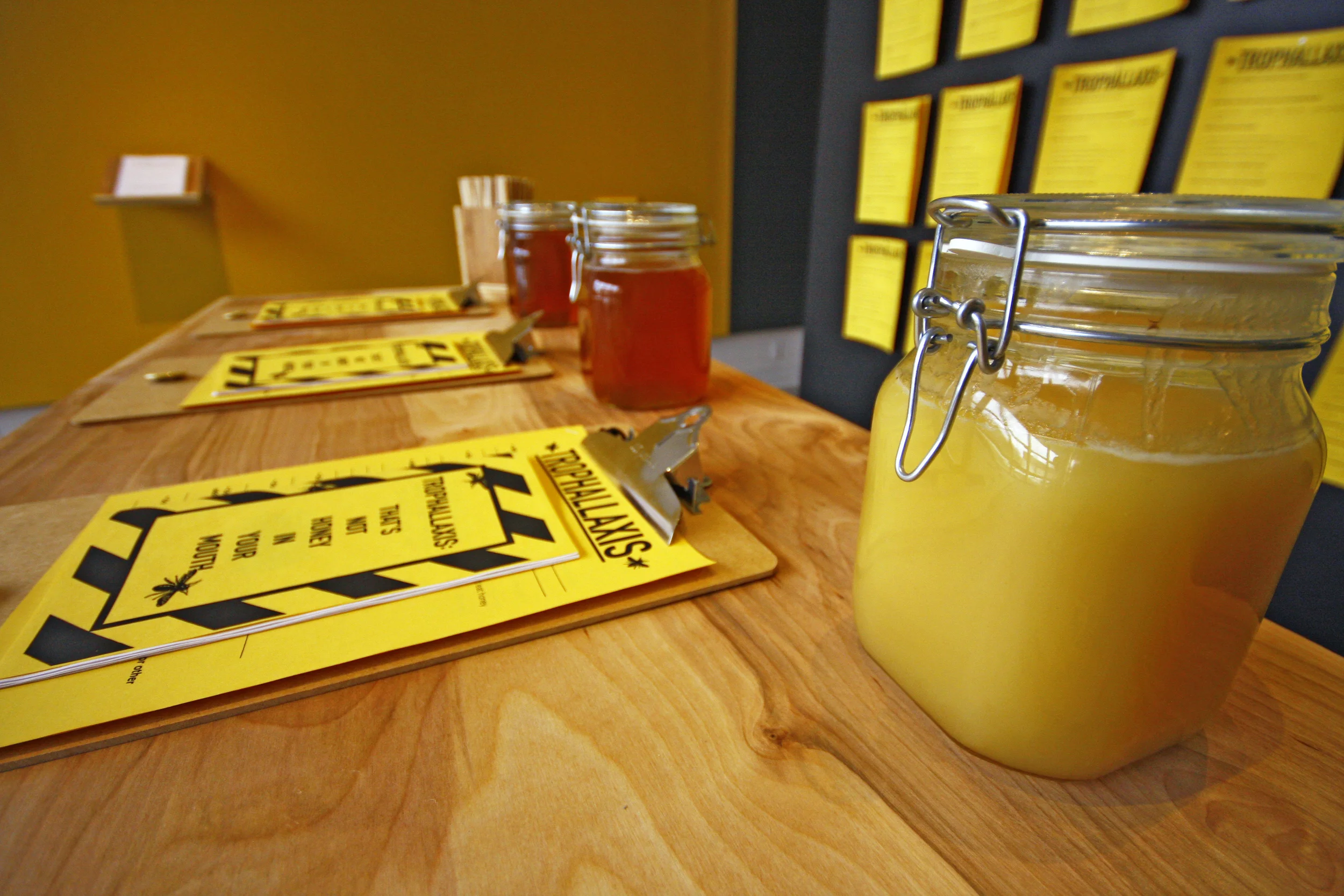
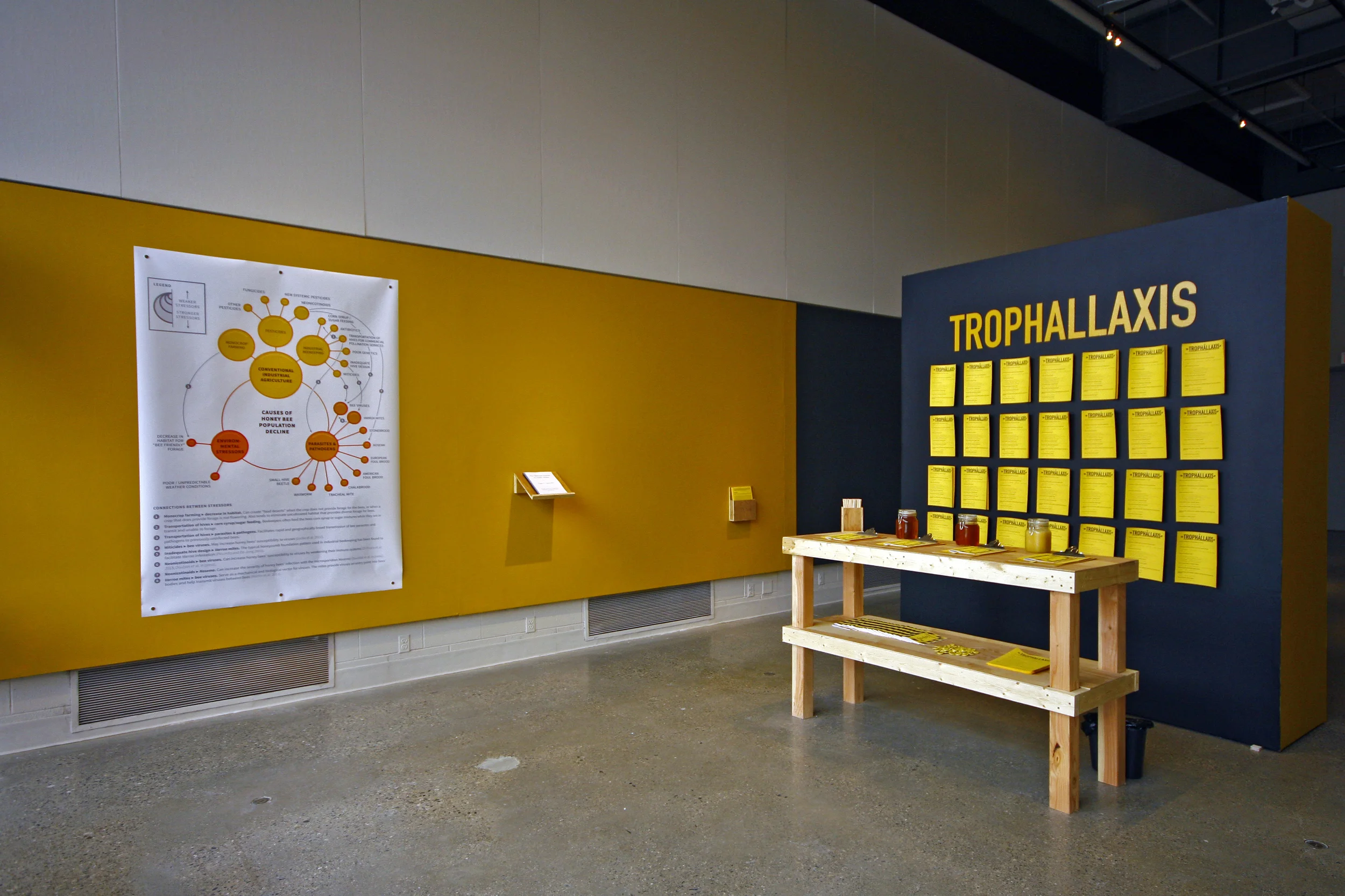
Trophallaxis: That’s Not Honey In Your Mouth emerged from my research into industrial pollination, honey adulteration, and pesticide use in the United States. The project links first-hand beekeeping, community workshops, and policy research with a public tasting. Participants were invited to taste and compare different honeys while completing surveys about food systems and transparency. The work moves between intimate encounter and systemic scale, asking how authenticity, trust, and ecological risk circulate through something as familiar as honey.
The project extended this investigation into the realm of policy, treating research and political intervention as part of the artistic form. Drawing on Joseph Beuys’s concept of social sculpture—and his movement from artistic practice into political organising—the project resulted in a policy paper addressing pesticide use and pollinator health, recommendations from which were subsequently adopted into Michigan state policy. In this sense, Trophallaxis asks not only how art might reveal the systems that shape everyday life, but how artistic practice might actively intervene within them.
MEETING BACON, 2012
Performance and mixed media installation. Handmade ceramics, serving table, camping stove, skillet, cured and smoked pork, BLT sandwiches, pig's head, and associated materials. Dimensions variable.
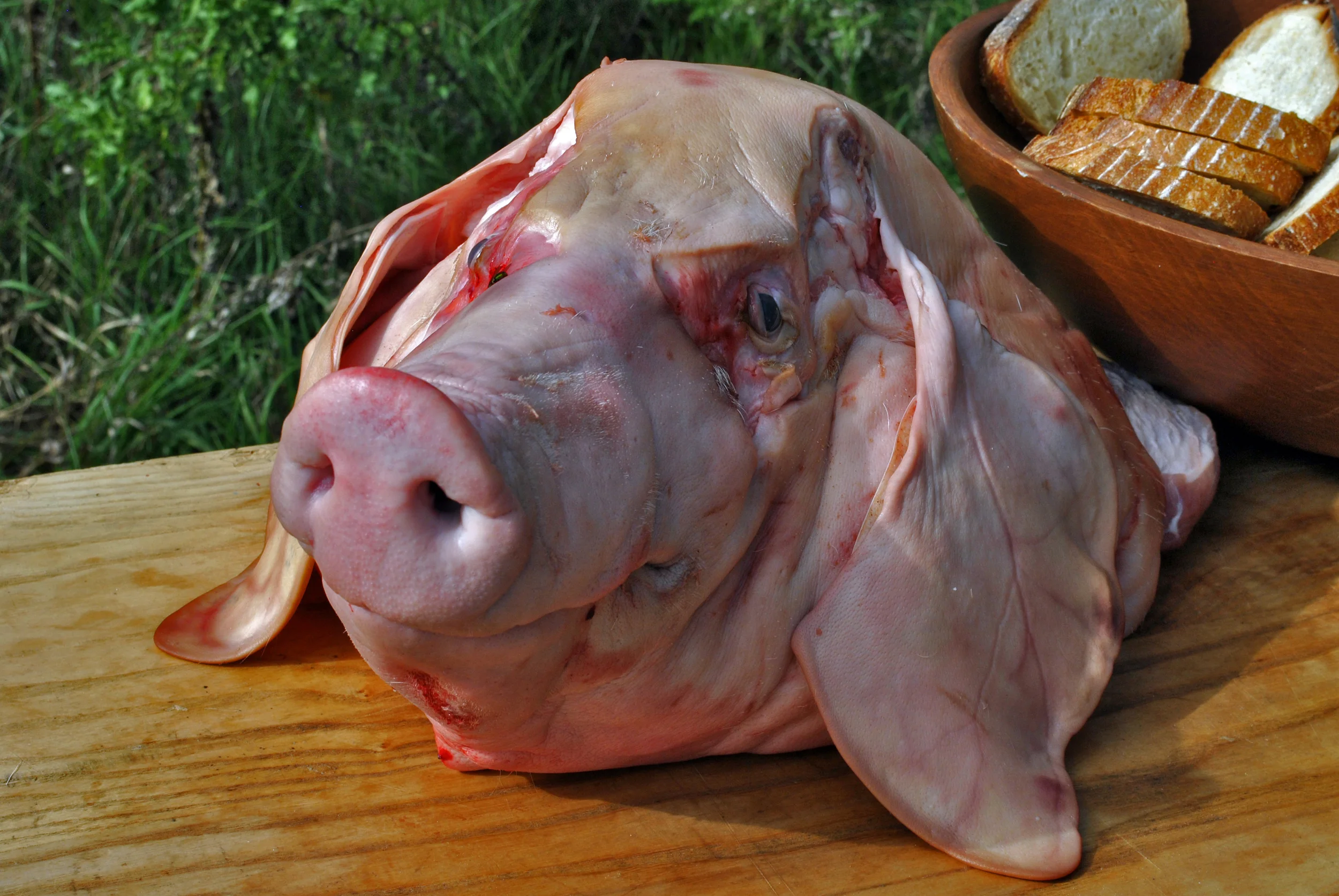
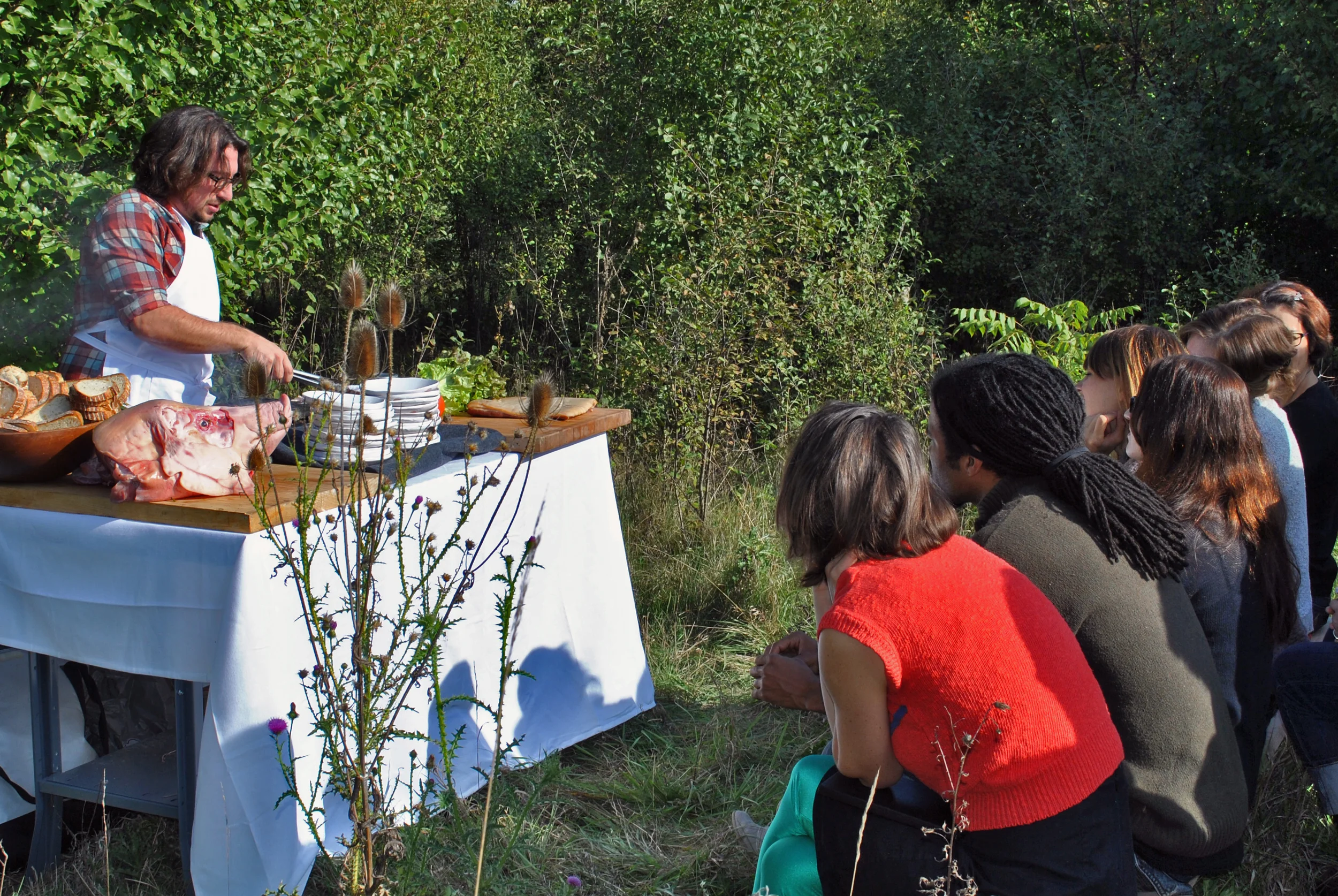
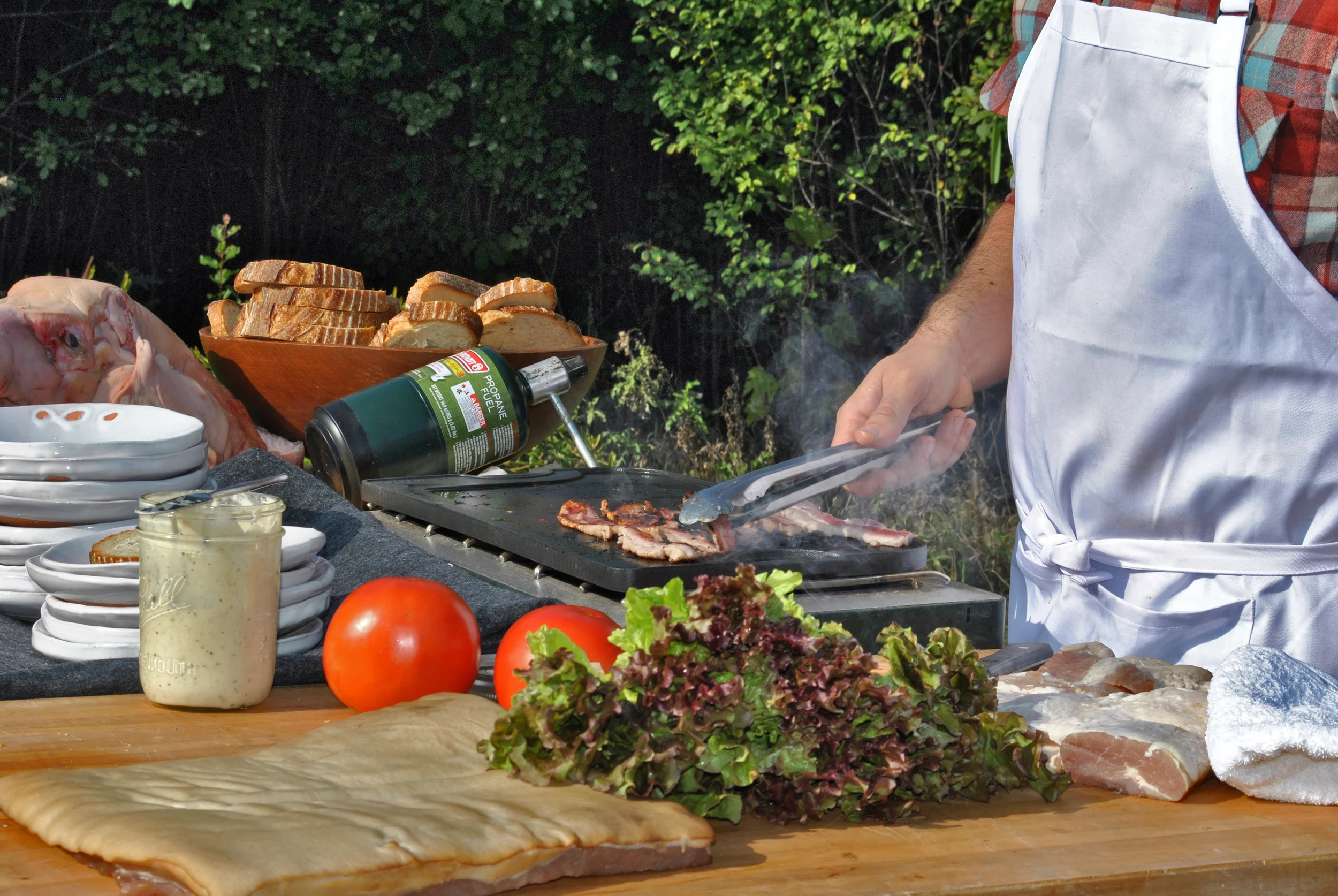
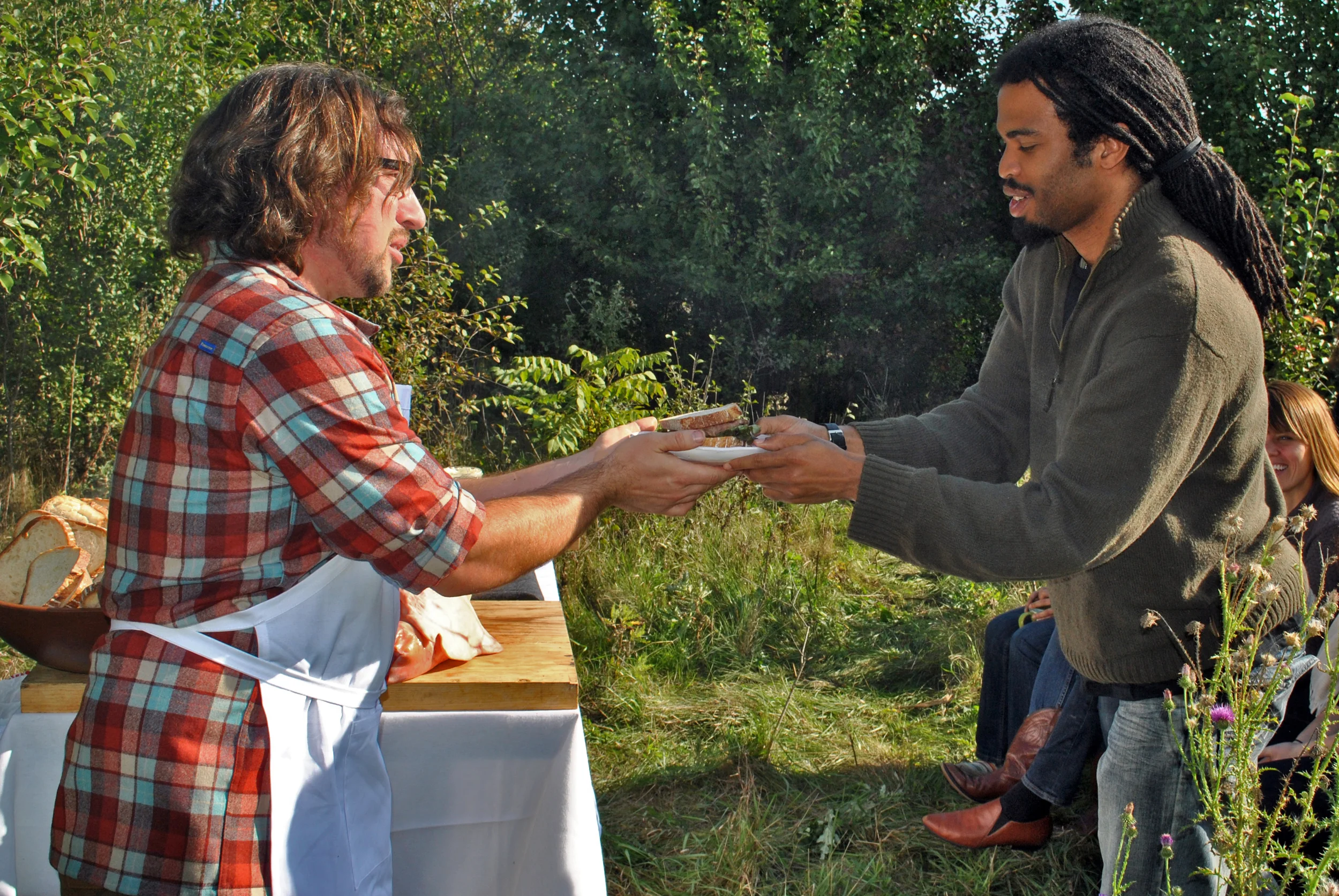
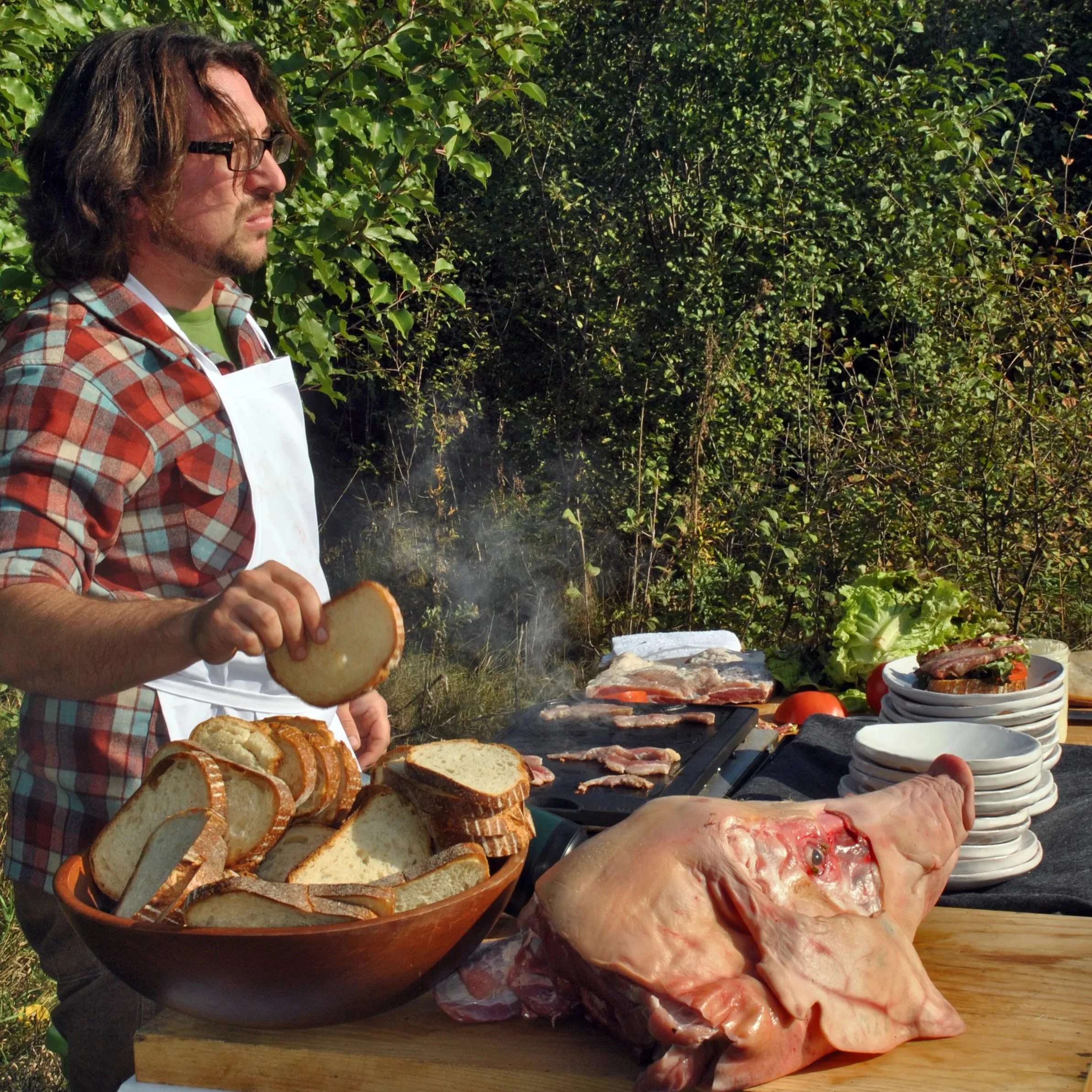
Meeting Bacon began as a research project into industrial meat and our emotional distance from its sources. Through farm visits, conversations with farmers and livestock, and craft processes such as ceramics and the curing and smoking of meat, the project followed a pig from life to meat. It culminated in a performance meal where BLT sandwiches were prepared and served, but only after each participant met the pig's head. The work stages a direct and maybe uneasy intimacy between eater and eaten, collapsing the distance that allows consumption to remain abstract. It asks what it means to acknowledge, not just consume, the lives that sustain us.